
In this post · 8 sections
The story I hear every week on Get Hired calls is the same.
100+ applications to Big 4. Zero replies. Six months of silence. The 485 visa clock ticking in the background.
Most of these grads are in Melbourne or Sydney, applying to the same 20 names as everyone else in their cohort. Deloitte. EY. KPMG. PwC. Accenture. The four big tech offices in Sydney. A handful of top-tier banks.
Clean resumes. Real Master's degrees. Decent portfolios. None of it cracks the inbox.
I went sideways twice in my own career to find work that actually called back. Mechanical to software in India. Software to Voice AI in Melbourne. This post lays out the 7 niche sponsor sectors barely anyone in your cohort is applying to, with named companies and LinkedIn searches for each, plus the 4-step process to work them.
Why this matters
The Big 4 queue is the most crowded it has ever been.
The Skills in Demand visa cut the work experience floor from two years to one, so every 485 grad became eligible 12 months earlier. The obvious-name pile got bigger, not smaller.
Standing in the wrong queue costs you months you do not get back. Most grads only realise it once the visa is nearly spent.
Who this is for
This is for you if:
- You are a 485 graduate sending 100+ applications to the Big 4 and hearing nothing back.
- You have a real Master's and a clean resume but still cannot crack the inbox.
- You are in Sydney or Melbourne applying to the same 20 names as everyone else in your cohort.
- You are months into the 485 with the visa clock ticking and need callbacks, not more applications.
The realisation
Australia has thousands of accredited sponsors. The exact number moves with each Home Affairs FOI release, and recent FOI-based lists put it at around 3,000.
| Category | Value |
|---|---|
| Accredited sponsors (around) | 3,000 |
| Names most 485 grads apply to | 20 |
Big 4 consulting and FAANG offices alone pull thousands of applicants per role. Top-tier banking is worse. Most other accredited sponsors get a fraction of that volume on a busy week.
The problem usually isn't the resume. It is the queue you're standing in.
The fix is to go sideways. Filter the sponsor pool by sector and pull out the ones nobody talks about in 485 group chats.
Why the niche queue matters even more right now
The Skills in Demand visa replaced the Temporary Skill Shortage visa on 7 December 2024[2]. It kept the subclass number, 482.
The big change for recent graduates: the work experience requirement dropped from two years to one[3].
That sounds great until you do the maths. Every 485 grad became eligible 12 months earlier. The niche sectors are where the squeeze stays survivable.
The 7 sectors I wish more 485 grads were targeting
| Category | Bottom of band | Top of band |
|---|---|---|
| Mining tech and geospatial | AUD 90k | AUD 130k |
| Marine and defence tech | AUD 90k | AUD 130k |
| Energy and utilities tech | AUD 80k | AUD 115k |
| Agritech | AUD 80k | AUD 110k |
| Civil consultancies | AUD 75k | AUD 105k |
| Logistics tech | AUD 75k | AUD 100k |
| Aged care and disability tech | AUD 70k | AUD 95k |
1. Aged care and disability tech
Aged-care reform pushed serious money into care-tech platforms. Most grads filter the sector out because the brand is hospitals and nursing homes, not software. The tech teams behind rostering, compliance and disability-services platforms are real, and they sponsor.
Aged care and disability tech
AUD 70-95k- Best for
- Software engineers, data analysts, backend developers
- Sponsorship
- Common (verify on the role)
- Why nobody applies
- Sounds "boring" or non-glamorous
- Companies
- HenderCare, Vital Living, Bolton Clarke
- LinkedIn search
- ("software engineer" OR "data analyst") AND ("aged care" OR "disability") AND "visa sponsorship"
2. Mining tech and geospatial
The highest pay band on this list, and the one Indian grads skip most because we stay glued to Sydney and Melbourne.
Perth and Brisbane have steady sponsorship pipelines. Many of those postcodes are classified regional under separate skilled-visa settings. Whether that helps you depends on your pathway, so confirm it with a registered migration agent (MARA).
Mining tech and geospatial
AUD 90-130k- Best for
- Software developers, geospatial / GIS, data engineers
- Cities
- Perth, Brisbane
- Sponsorship
- Active
- Companies
- RPMGlobal, Maptek, Seequent, Hexagon Mining
- LinkedIn search
- ("software developer" OR "geospatial") AND ("mining" OR "RPMGlobal" OR "Maptek") AND "sponsor"
3. Agritech and farm software
A real software sector with venture funding and offshore growth. It just gets read as "farms" by people who haven't looked. Teams are dev-heavy and small enough that hiring managers actually read inbound applications.
Agritech and farm software
AUD 80-110k- Best for
- Data analysts, full-stack developers, ML engineers
- Sponsorship
- Common
- Bonus
- Many roles sit in postcodes classified regional under skilled-visa settings (confirm with a MARA agent)
- Companies
- Agriwebb, Telstra Agribusiness, AgriDigital
- LinkedIn search
- ("data analyst" OR "developer") AND ("agritech" OR "agriculture" OR "farm software") AND Australia
4. Civil consultancies (not the big 5)
If your background is civil or structural, this is the bracket that will actually call you back. The top 5 brands get the attention and most of the rejections. The next tier does the same project work, often for the same clients, and sponsors regularly.
Civil consultancies (not the big 5)
AUD 75-105k- Best for
- Civil, structural, BIM engineers
- Sponsorship
- Regular
- Why nobody applies
- Everyone targets WSP / Aurecon / Arup / Mott / GHD
- Companies
- SMEC, Stantec (which bought Cardno's Australian business in 2021), BG&E
- LinkedIn search
- ("BIM" OR "civil engineer" OR "structural") AND ("SMEC" OR "Stantec" OR "BG&E") AND "visa"
5. Marine and defence tech (non-cleared roles)
Most people see "defence" and assume they need an Australian passport. A lot of roles do. A lot don't.
The shipbuilding ramp-up across Adelaide and Melbourne created a genuine shortage of software and systems engineers. The non-cleared roles take Skills in Demand sponsorship like normal tech roles.
Marine and defence tech
AUD 90-130k- Best for
- Software engineers, systems engineers
- Sponsorship
- Common for roles that do not require citizenship
- Note
- Some roles need citizenship clearance, but plenty don't
- Companies
- Saab Australia, Thales Australia, Babcock
- LinkedIn search
- ("software" OR "systems engineer") AND ("Saab" OR "Thales Australia" OR "Babcock") AND "sponsor"
6. Energy and utilities tech
Every utility in the country is mid-modernisation. Smart meters, grid analytics, demand forecasting, customer dashboards. They run enormous data programs and hire visibly because they are public-facing.
Energy and utilities tech
AUD 80-115k- Best for
- Data engineers, IT, cloud, ops
- Sponsorship
- Active in IT and data roles
- Why nobody applies
- Assumes utilities = legacy, not hiring tech
- Companies
- Ausgrid, Energy Queensland, Essential Energy, Western Power
- LinkedIn search
- ("data engineer" OR "IT") AND ("Ausgrid" OR "Energy Queensland" OR "Essential Energy")
7. Logistics and supply chain tech
Logistics looks like trucks from the outside. From the inside it is one of the densest backend-engineering domains in the country: routing, last-mile, warehouse software, EDI, real-time tracking. The tech arms hire steadily and almost nobody from the international-student pool applies.
Logistics and supply chain tech
AUD 75-100k- Best for
- Backend developers, data engineers, SREs
- Sponsorship
- Active in backend and data
- Why nobody applies
- Indian grads pattern-match "logistics = ops"
- Companies
- Toll Group, Linfox tech arm, Kuehne+Nagel, DB Schenker, Mainfreight
- LinkedIn search
- ("backend developer" OR "data") AND ("Toll" OR "Linfox" OR "Kuehne") AND Australia
Stuck in the Big 4 queue with no callbacks?
This is exactly the reset I run in my 1-on-1 Get Hired sessions. In sixty minutes live on the call, we rebuild your resume around niche-sponsor keywords, rewrite your LinkedIn around the searches those recruiters actually use, and build a sponsor target list that is not the one your cohort is using.
What you can do about it
This is the loop I run with every Get Hired client. Built around the niche sponsors, not the obvious ones.
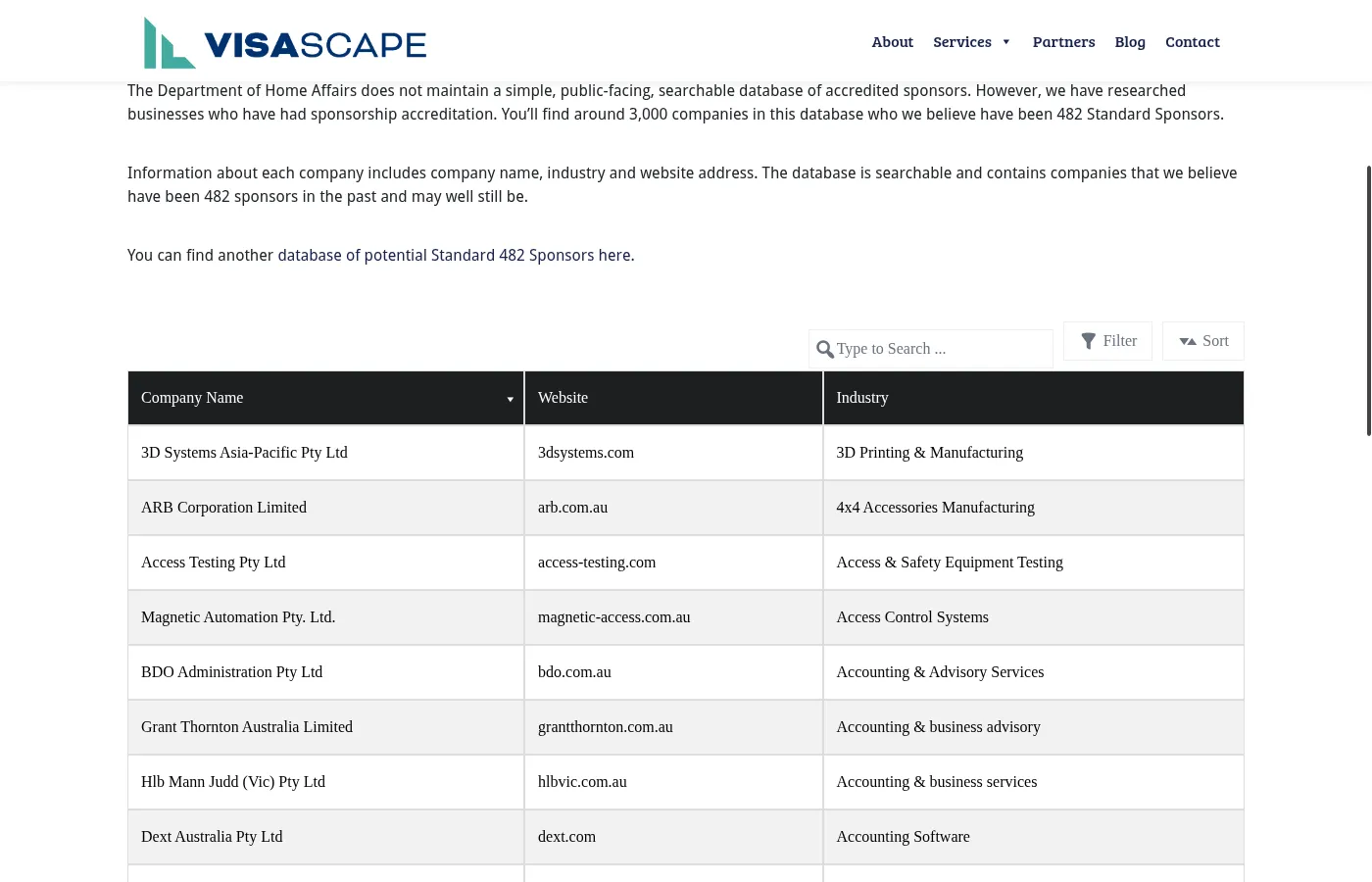
- Pull the latest accredited-sponsor listHome Affairs does not publish a public, searchable database. The list comes out through FOI requests, and you can find recent releases on right-to-know archives or aggregators like OzJobList and Visascape. Pull the most recent one and filter to your state. That alone is more sponsor leads than most grads ever look at.
- Cross-reference with LinkedInRun the boolean searches above in LinkedIn Jobs. Phrases that signal a real sponsor: "we sponsor", "visa sponsorship available", "open to sponsoring the right candidate", "can support 482 / SiD application". You want the JD lines that filter you in, not out.
- Reverse the application ratioMost 485 grads do 50 Big 4 applications and zero niche. Do the inverse: apply to 10 niche sponsors before you send another Big 4 application. It will feel like the wrong companies. It isn't. These queues aren't 5,000 deep.
- Cold-DM the hiring managerIn niche sectors the hiring manager actually reads LinkedIn DMs. Three sentences: the role you saw, one specific reason their work matters to you, one sentence on what you bring. Talk about their sector, not your visa.
What changes when grads do this
The shift takes a few weeks to feel real. The first niche callbacks come from companies most of the cohort has never heard of. Application volume drops and interview volume goes up.
The niche sectors are not quietly the best companies in Australia. Some are great, some are average. They are the sectors where your resume gets a fair read.
Big 4 isn't a strategy
It is a queue. The first decision in your job search is which queue you stand in.
Sources and further reading
- visascape.com.au
Visascape, Accredited Sponsors. A searchable third-party database of around 3,000 companies believed to have been 482 Standard Sponsors. It notes that Home Affairs has no public, searchable sponsor database.
- kpmg.com
KPMG, Australia: Introduction of Skills in Demand Visa (GMS Flash Alert 2024-240). The Skills in Demand visa replaced the Temporary Skill Shortage visa on 7 December 2024 and kept the subclass number 482.
- minterellison.com
MinterEllison, New Skills in Demand visa and Core Skills Occupation List. Confirms the work experience requirement fell from two years to one.
Visa rules and sponsor lists change. Nothing here is migration advice. For decisions about a specific visa or PR pathway, talk to a registered migration agent (MARA).