
In this post · 7 sections
On 9 July 2026, your student visa stopped being a form you fill in and became an agenda item between two prime ministers.
At the Third Australia–India Annual Summit[1] in Melbourne, India's Foreign Secretary spoke publicly about the delays Indian students are hitting[2] on their subclass 500 visa applications. Australia did not deny them.
This post breaks down what the summit actually said about your student visa, why a slowdown does not bury everyone equally, and what separates the files that keep moving from the ones that stall at the bottom of the backlog.
Why this matters
A subclass 500 approval that slips by a few weeks is not a small annoyance.
Miss your processing window and you miss your intake, defer your Confirmation of Enrolment, and push your whole timeline back a semester. The summit confirmed these delays are real and now political, not a rumour on a Telegram group.
But "raised at a summit" is not "fixed." No faster processing was announced. No new rule made applications move quicker.
So the delay stays for now. What most separates a file that keeps moving from one that stalls is how clearly genuine it looks by the time a case officer opens it.
Who this is for
This is for you if:
- You are about to lodge a subclass 500 student visa from India in the next few months.
- You already applied and you are stuck waiting, unsure if the delay is your file or the system.
- You are still picking a course or university and worried a weak choice flags your application.
- You keep seeing summit headlines and cannot tell whether anything actually changed for you.
What actually got said at the summit
At a special briefing on the visit, Foreign Secretary Vikram Misri of India's Ministry of External Affairs said India was aware of concerns among Indian students about the delays some visa applications are subjected to[2].
Australia's response was not a denial. According to Misri, there was "acknowledgement that maybe some of the processes have become a bit more onerous", and an assurance that this "will not result in the reduction of opportunities for genuine students from India."
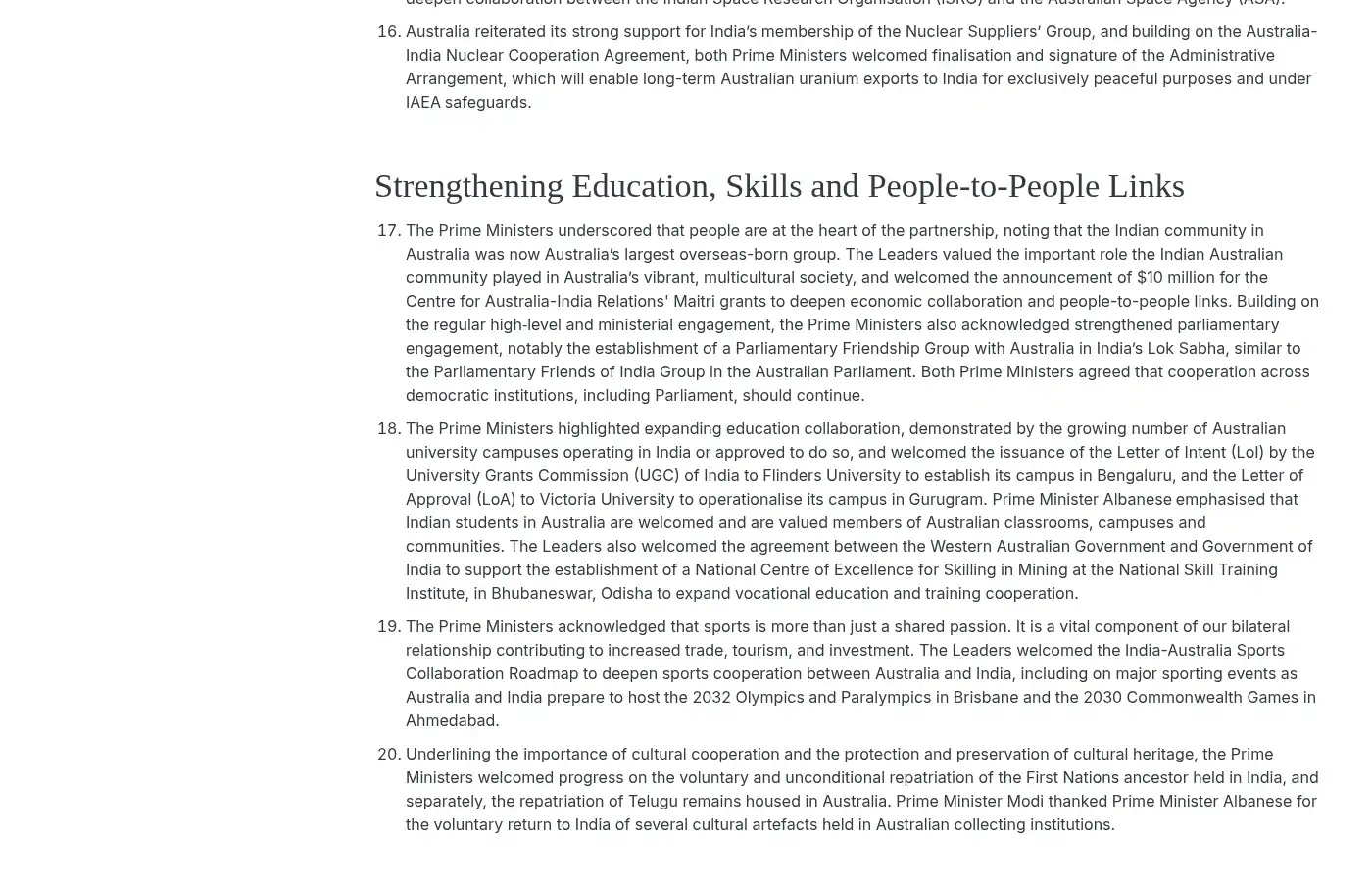
In the official joint statement, PM Albanese emphasised that Indian students are "welcomed and are valued members"[1] of Australian classrooms, campuses and communities.
What the summit gave you
9 July 2026- Tone
- Indian students "welcomed and are valued members" of Australian campuses
- Assurance
- No reduction of opportunities for genuine students from India
- Acknowledgement
- Some processes may have become "a bit more onerous"
What it did not give you
Still true- Faster processing
- None announced
- New rule
- Nothing that makes applications move quicker
- Your file
- Still assessed on whether you read as a genuine student
Read that assurance closely, because the operative word is doing all the work. Not "students." Genuine students.
That is the filter, and it is the filter that survives a slowdown.
Why you have more leverage than you think
You are not a small market that Australia can quietly wave off.
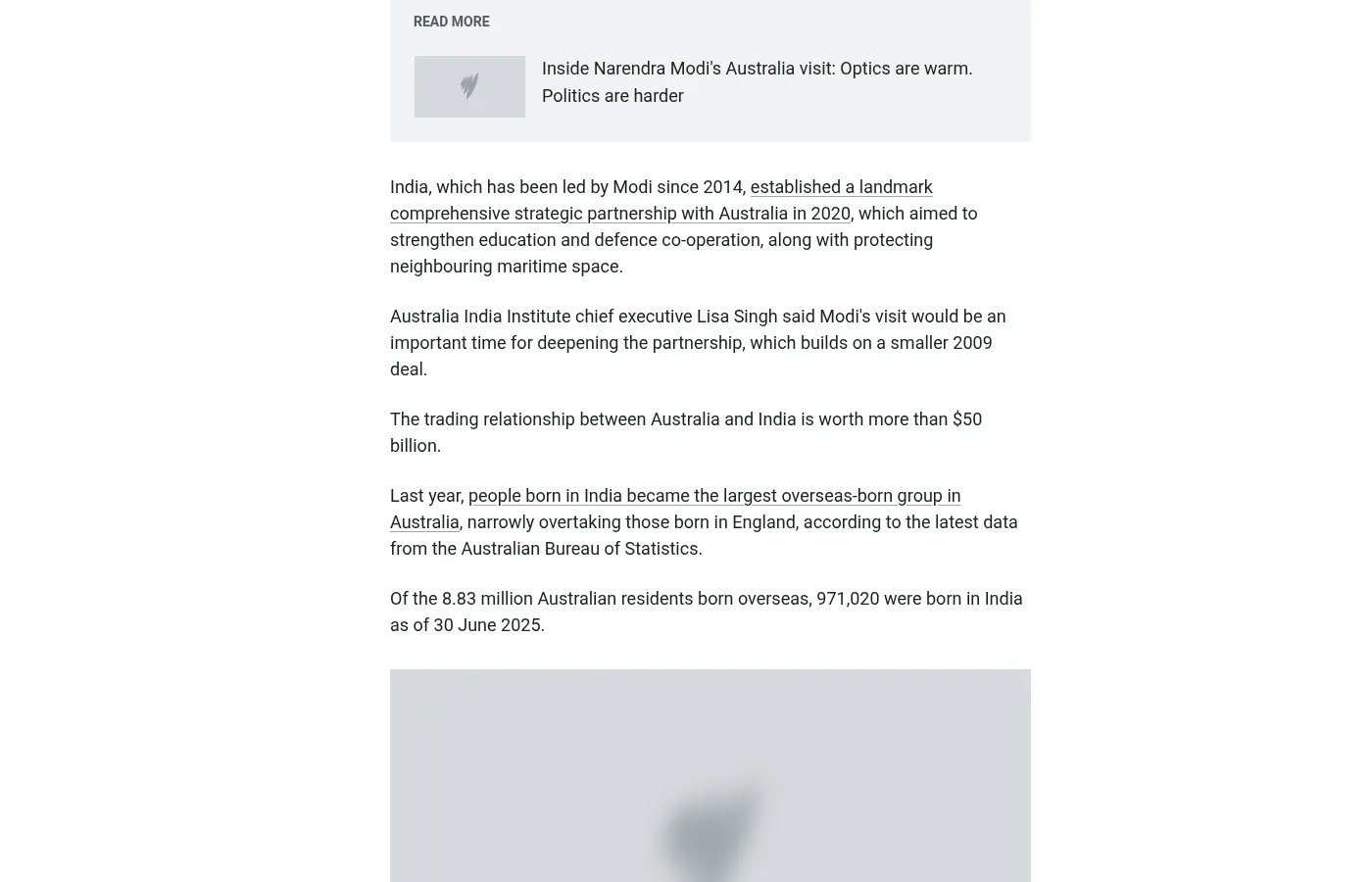
As of 30 June 2025, 971,020 Australian residents were born in India[3], out of 8.83 million born overseas. That makes India-born residents the single largest overseas-born group in the country.
The direction of travel is set the other way too. Eight Australian institutions are opening campuses inside India[4], with Flinders University due to welcome its first Bengaluru students in early 2027.
Both governments need this relationship to work. That is why the delays got raised at prime-minister level at all.
But be honest about what that leverage does and does not do. It keeps the door open. It does not move you up the queue.
Political goodwill is not a processing lane, and no amount of it strengthens a generic file.
The word that survives a slowdown
When processing slows, case officers do not get more generous. They get more reason to scrutinise.
The Genuine Student requirement[5] is where that scrutiny lands. A clear, well-evidenced, obviously-genuine file keeps moving. A thin, generic, copy-paste file is the one that gets parked while the officer works through the ones that are easy to approve.
So the takeaway is not "panic about the delay." The delay is real and it is out of your hands.
Being a clearly genuine applicant is the one edge you can build before you lodge.
Picking a course that actually leads to a job in Australia?
I run 1-on-1 strategy sessions for international graduates here, and I have helped 30+ get hired in the Australian market. We map your target roles, your resume and your job-search plan, so the course you are about to commit thousands to actually leads somewhere hireable. I am not a registered migration agent, so for your visa file itself I point you to one.
What you can do about it
Before anything else
I am not a registered migration agent, and none of this is personal migration advice. It is just what the public criteria and a slowdown tell you about where files stall, so you know what to bring to a registered agent.
Step 1. The study-to-career logic officers look for
The question behind the Genuine Student requirement is essentially "does this course make sense for this person?"
A commerce graduate applying for an unrelated diploma, with no thread back to their background or plans, creates a gap. A gap is what draws scrutiny.
The files that read as genuine tend to be the ones where the course, the university and the post-study plan line up into one clear story. How you evidence that for your own situation is exactly what a registered agent is for.
Step 2. How funds evidence is read when processing slows
Delays give officers more time to look at money.
Sudden large deposits, unexplained transfers, or numbers that only just clear the threshold are the kind of thing that invites questions. Consistent, well-documented finances are simpler to assess.
How your specific financials should be presented is a question for a registered agent, not a blog post.
Step 3. Why shortcuts backfire in a slowdown
Every slowdown breeds a market of shortcuts: fast-track promises, template statements, "guaranteed" approvals. In a scrutiny environment those are the files that tend to get flagged.
A template Genuine Student statement is widely considered weaker than a plain honest one. Slow and specific beats fast and generic right now.
Sources and further reading
- pm.gov.au
Third Australia–India Annual Summit Joint Statement (pm.gov.au): the official readout from 9 July 2026, including Albanese emphasising that Indian students are welcomed and valued members of Australian classrooms, campuses and communities. It does not mention visa processing.
- aninews.in
MEA on student-visa delays (ANI): Foreign Secretary Vikram Misri on student concerns about visa delays, Australia's acknowledgement that some processes have become "a bit more onerous", and the assurance of no reduction of opportunities for genuine students. 9 July 2026.
- sbs.com.au
971,020 India-born residents (SBS News): the population figure, citing ABS data as of 30 June 2025, behind why both sides keep coming back to the table.
- thepienews.com
Flinders announces India campus as Modi visits (The PIE News): the Bengaluru campus timeline and the eight-institution context.
- immi.homeaffairs.gov.au
Department of Home Affairs, Student visa (subclass 500): the official visa page, including the Genuine Student requirement.
This post is general information, not personal migration advice. I am not a registered migration agent. For decisions tied to your specific subclass 500 file, check the official Department of Home Affairs guidance or a registered professional.